<!DOCTYPE html>
Protecting Your HVAC System from Arizona Monsoon Dust Storms | Day & Night Air Conditioning, Heating, & Plumbing
Why Phoenix HVAC Systems Need Monsoon-Ready Care
Phoenix sits in the Sonoran Desert, where July through September brings outflow winds, microbursts, and fast-moving haboobs. These dust storms carry PM10 and larger sand that coat condenser coils, clog filters, and grind blower bearings. The summer heat already pushes rooftop units and split systems near their limits. A dust-choked coil can bump head pressure, push amperage past nameplate, and trip safety controls. The result is short cycling, AC blowing warm air, or a dead compressor on a 115°F afternoon.
Day & Night Air Conditioning, Heating, & Plumbing serves Phoenix, AZ and the broader Maricopa County corridor. The team sees the same failure patterns every monsoon season. Many are preventable with a few habits, some smart upgrades, and honest maintenance. For homeowners and facility managers in Arcadia, Biltmore, Desert Ridge, and Ahwatukee Foothills, these steps can be the difference between steady cooling and an emergency AC shutdown during a dust wall.
How Dust Storms Stress Central Air and Rooftop Package Units
Dust storms load outdoor condenser coils with a dense mat of fine soil. Coil fins on modern condensers are tight, often 18 to 24 fins per inch. That density improves heat transfer on clean metal. It also traps particulates. When fins plug, condensing temperature rises and the compressor works harder. Gauge readings show higher head pressure. A 5 to 10°F increase in condensing temperature can force the compressor to draw several more amps. That heat adds up in Phoenix neighborhoods like Maryvale and Sunnyslope where roofs absorb brutal sun.
On split systems, dust also reaches the air handler. A dirty or collapsed filter creates an airflow restriction. Evaporator coil temperature drops below freezing and moisture turns to ice. Copper refrigerant lines frost over. The system short cycles and the thermostat never satisfies. The homeowner hears the condenser start and stop or notices the blower runs but vents push warm air. This is common after a haboob sweeps across Paradise Valley Village or North Mountain and the filter gets loaded in a single evening.
Rooftop units on commercial buildings near Chase Field, Footprint Center, or Phoenix Sky Harbor International Airport see a different problem. Dust and grit infiltrate blower housings and fan bearings. Squealing fan motors show up a week later. Belt-driven assemblies slip, heat up, and throw rubber dust. Contactors in the control cabinet get pitted faster. The start capacitor takes a beating in high heat. A weak capacitor stalls the compressor at startup, then trips the breaker.
Common Monsoon-Season Failures the Team Sees in Phoenix
The service board at Day & Night lights up the moment the first outflow hits South Mountain or the 202 corridor by Ahwatukee. Calls show the same symptom clusters season after season. AC blowing warm air is the top complaint. The cause often traces to one of four issues. Coils plugged with dust and cottonwood fluff. A frozen evaporator due to airflow loss. A burned out start capacitor or pitted contactor. Or low R-410A from a small leak revealed by thermal cycling and vibration.
Short cycling shows up both in homes and on rooftop units. The compressor tries to start, hums, and drops out. In many cases, high head pressure from a dirty condenser trips the high-pressure switch. In others, a weak capacitor or high locked-rotor amperage stops the compressor from spinning up. The longer the heat wave holds across 85032, 85050, and 85085, the more marginal components fail.
Clogged condensate drain lines are another monsoon special. Dust mixes with condensate and forms sludge in the trap. Humid days around Papago Park or the Biltmore area push latent load. The safety float switch opens and the air handler stops. The thermostat is set to cool, the outdoor unit is quiet, and the home warms fast. Many homeowners call for emergency air conditioning repair near me and are surprised it resolves with a professional drain clear and a biocide treatment.
Filter Strategy for Haboob Conditions
Filter selection and cadence carry more weight during monsoon season. A high-MERV filter blocks more dust, but static pressure rises as the filter loads. Most residential blowers handle up to 0.5 inches w.c. Of total external static. Some homes in Arcadia or older parts of 85018 have restrictive returns. A MERV 13 pleated filter may starve airflow in these setups during dust events. A balanced approach works better. Use a quality MERV 8 or 11 pleated filter that fits snug. Avoid gaps that allow bypass. Check pressure drop across the filter. If it climbs past 0.3 inches w.c. Quickly, shorten the replacement cycle during July and August.
Homeowners who travel or run rental properties near Camelback Mountain or the Arizona State Capitol benefit from media cabinets with deep pleats. A 4-inch media filter delivers more surface area. That yields lower pressure drop at a given dust load. For allergy-sensitive families, add an electronic air cleaner or a properly sized bypass HEPA, but verify the blower capacity. The Day & Night team tests static and blower speeds so air changes stay in a safe zone during monsoon dust surges.
Condenser Coil Defense: Shields, Cleaning, and Airflow
The outdoor unit battles dust first. Some homeowners in Desert Ridge and Paradise Valley add temporary mesh wraps around the condenser during storm alerts. Wraps help, but they can choke airflow if left on. If a wrap is used, remove it once the dust wall passes. A permanent solution involves coil-cleaning discipline and correct clearances. Keep 18 to 24 inches of free space around the unit. Trim oleanders and bougainvillea that shed into the coil.
Cleaning matters more than frequency numbers on a calendar. A condenser sitting near a dirt lot off Deer Valley Road will load faster than one in a paved Arcadia cul-de-sac. When fins look matted or the head pressure runs high, schedule a coil cleaning. The right method uses low-pressure water and a non-acid foaming cleaner on the exterior and interior faces. Protect electrical components and avoid bending fins. After cleaning, a gauge set will confirm head pressure and subcooling have returned to target ranges for the ambient conditions.
For rooftop units in Midtown near the Heard Museum or downtown near Chase Field, wind-driven debris catches on coil guards and screens. Maintenance techs must pull panels and wash from the inside out. Check that fan blades are free of dings from pebbles and that set screws are tight. A small blade imbalance adds vibration that can fracture copper refrigerant lines over time.
Evaporator Coil, TXV, and Air Handler Checks After a Dust Event
The indoor side tells the rest of the story. If the filter collapsed during a storm, dust can embed itself in the evaporator coil fins. High latent load days around Phoenix Sky Harbor or along the Salt River banks pull more moisture across the coil. That mud cakes deep into the fin pack. Symptoms surface as low supply air temperature at first, then frost, and later a thaw cycle with pooled water. A thorough clean requires removal of the A-coil cover, safe coil cleaners, and a wet vac on the drain pan. The technician inspects the expansion valve, also called the TXV, for proper superheat control. Any sign of oil along the copper refrigerant lines suggests a leak.
While the cabinet is open, blower wheels and housings deserve a close look. A thin layer of dust on the blades reduces airflow by a measurable amount. That forces the blower motor to work harder and elevates amperage. Motors run hotter and fail sooner in August across Maryvale and Sunnyslope. Day & Night techs pull and clean the wheel, then check motor bearings and balance. On variable-speed air handlers, dirt on the sensing circuit board can throw off readings. A careful vacuum with ESD-safe methods pays off.
Monsoon-Proofing for Heat Pumps, Ductless Systems, and RTUs
Heat pumps across Phoenix zip codes like 85044 and 85048 see heavy duty during monsoon nights. The reversing valve cycles as temperature swings between storm downdrafts and humid mornings. Dust can stick to the outdoor coil during damp hours, making the next day’s sun bake it on. A rinse after a dust event keeps efficiency intact. On ductless mini-splits from Mitsubishi Electric or Daikin, clean the indoor cassette filters more often in July and August. Those fine mesh screens load fast. Outdoor mini-split coils sit close to grade and inhale dust. A quick hose down from inside out prevents strain on the inverter-driven compressor.
Rooftop units on retail strips in Tempe, Mesa, Glendale, Peoria, Chandler, or Scottsdale need special attention to hail guards and panel seals. If a panel goes missing in high wind, dust invades the electrical bay. Contactors pit faster, relays arc, and control boards corrode. Day & Night stocks universal contactors and heavy-duty start capacitors on every truck to bring a stranded RTU back online fast during a storm call. That rapid response reduces downtime for shops and restaurants near Footprint Center or in the Biltmore Fashion Park area.
Electrical Components That Fail More Often During Monsoon Season
Several electrical parts show higher failure rates in sustained heat coupled with dust. Start capacitors swell and leak dielectric fluid. The plastic bulges at the top. The compressor fails to start, and the homeowner hears a dull hum before the overload trips. Contactors accumulate a fine dust film that turns abrasive. Arc marks build on the contacts. The coil may still pull in, but voltage drop rises and heat builds. Relay switches in control circuits behave erratically. Thermostat wires in rooftop conduits chafe under vibration. A blown low-voltage fuse at the air handler ends the call.
Experienced technicians carry part numbers that match common units in Phoenix. Trane, Carrier, Lennox, Goodman, Rheem, York, Bryant, American Standard, and high-end options like Mitsubishi Electric and Daikin all have unique quirks. Day & Night’s NATE-certified technicians test microfarads under load, confirm contactor coil resistance, and measure inrush current against locked-rotor specs. These checks keep guesswork out and shorten the repair window on a 110°F afternoon in Paradise Valley Village or Desert Ridge.
How Dust Translates Into High Energy Bills
A dusty condenser forces higher head pressure. The compressor works harder for the same BTUs of heat rejection. Power draw climbs. A 3 to 5 amp increase at 240V is common on a plugged coil. That is several hundred extra watts every hour the unit runs. Inside, a dirty evaporator or a tight filter hikes static pressure. The blower moves less air and must spin faster. Variable-speed motors try to hold target CFM by increasing torque, which raises watt draw. The thermostat stays in a cooling call longer. Monthly bills creep up, especially across larger homes in Arcadia or Biltmore with multiple zones.
Clean coils and the right filter schedule deliver hard savings. Many Day & Night customers in 85016 and 85018 report bill drops after a monsoon tune-up that includes coil cleaning, drain service, and a static pressure reset. On commercial RTUs, a clean condenser and correct charge can move EER back to nameplate, protecting operating budgets during peak APS demand windows.
What a Monsoon-Season Tune-Up Includes
A standard spring tune-up in Phoenix checks the basics. A monsoon-season tune-up targets dust-driven issues and heat stress. The visit starts with intake of the complaint or recent symptoms. Then the tech inspects outdoor coils, verifies condenser fan amps, and checks compressor operation. Subcooling and superheat readings matter more in high heat because a few degrees off under load points to airflow trouble or charge drift. Electrical tests verify start capacitors, run capacitors, and contactors. The drain line gets flushed and treated. Inside, the technician checks the filter, the blower wheel, and confirms total external static pressure. If static is high, the team explores duct or return fixes that pay back in comfort and reliability.
Quick At-Home Checks During a Dust Event
Homeowners can take simple steps during and right after a haboob. These steps help protect the system until a professional can visit if needed. Keep it safe. If something smells burnt, if breakers trip, or if there is ice on the lines, shut the system off and call for help. Avoid removing panels or reaching into a running unit. A few low-risk actions make a difference for homes in South Mountain, Sunnyslope, and Maryvale.
- Turn the thermostat to “Fan On” for 20 to 30 minutes if you see ice on copper lines. Let the coil thaw before running cooling again.
- Check the filter. If it looks loaded or collapsed, replace it with the correct size and orientation.
- After the dust wall passes, gently hose the outdoor coil from the inside out if accessible. Do not use high pressure.
- Look for standing water at the indoor unit. A backed-up drain pan points to a clog.
- Listen for squealing or grinding from rooftop units. That sound signals a belt or bearing issue that needs a technician.
Design Tweaks That Pay Off in Phoenix Zip Codes 85032, 85050, and 85085
A few upgrades deliver strong returns in dusty climates. A media filter cabinet that accepts 4-inch filters reduces static and extends intervals. Return air improvements reduce coil freeze-ups during storms. UV lights installed on the supply side of the evaporator control biofilm. That keeps condensate cleaner and slows drain clogs. Coil coatings on rooftop units resist dust adhesion and corrosion. For homes near construction zones in North Phoenix or along new builds in Desert Ridge, temporary condenser screens that are removed after storms help during the heaviest dust months.
In older Phoenix homes with tight returns, a blower tap change and duct corrections stabilize air volume. That prevents low temperature at the coil during filter loading. Many systems benefit from a high-efficiency, variable-speed heat pump swap when the old condenser dies. Brands like Trane, Carrier, Lennox, Goodman, Rheem, York, and Bryant all offer variable-speed options that manage airflow better under changing static. For sunrooms or detached casitas in Paradise Valley Village or Arcadia, a Mitsubishi Electric or Daikin ductless mini-split keeps dust load localized and simplifies maintenance.
Commercial Considerations for Rooftop Units Near Downtown and the Airport
Commercial RTUs on buildings near Phoenix Sky Harbor International Airport or the Phoenix Convention Center face some of the harshest duty in the Valley of the Sun. Jet blast moves dust in unpredictable patterns. Building owners should plan monthly visual coil checks from July to September. Belts deserve inspection and tension checks because dust acts like grit and chews pulleys. Control cabinets need periodic vacuuming with power off. Weather stripping on access panels must be intact to keep dust out of electronics.
Day & Night’s commercial HVAC repair team stocks universal contactors, relays, programmable thermostats, and a range of capacitors to get rooftops back online same day. Trucks carry coil cleaners, fin combs, and replacement MERV filters in bulk. This stock strategy solves common failures on the first visit, reducing downtime for restaurants near Chase Field, galleries by the Heard Museum, and offices along Central Avenue. The crew logs readings and flags units that trend toward high head pressure so cleaning can be scheduled before a failure.
What Counts as an Emergency in Phoenix Heat
In July and August, AC outages are more than an inconvenience. They can be life-safety issues, especially for seniors, infants, and anyone with health conditions. If indoor temperature climbs above safe levels or if the outage occurs during an Excessive Heat Warning, it is time to search for emergency air conditioning repair near me and request 24/7 help. Short cycling that will not stop, a system that blows warm air on a 110°F day, or a unit that trips the breaker each time you reset it also qualifies for an urgent response.
Day & Night fields round-the-clock crews during monsoon season. Dispatchers route calls across Phoenix from Arcadia and Biltmore to Sunnyslope and Maryvale. Response vehicles station near major connectors for speed, including I-17, Loop 101, and the US-60 spine. Rapid AC repair Phoenix service protects homes and businesses when the weather turns fast and dangerous.
How Technicians Diagnose Dust-Related AC Failures
Good diagnostics start with airflow. Technicians measure return and supply static pressure and calculate total external static. They compare that to the blower table to estimate CFM. If airflow is low, they inspect the filter, coil, and ducts. Next comes refrigerant circuit analysis. Superheat and subcooling point to undercharge, overcharge, or airflow issues. Visual checks for oil at flare nuts or service valves help locate slow leaks that worsened under monsoon stress. Electrical tests confirm capacitors, contactors, and relays are within spec. On systems with TXVs, the tech evaluates proper feeding of the evaporator.
Trucks stay stocked with heavy-duty start capacitors and universal contactors to fix many no-cool calls on the first visit. When the compressor is at risk, amperage under load and insulation resistance tests guide the decision to repair or replace. A burned out compressor on an older R-22 system usually points to replacement. On modern R-410A units, a clean coil, correct charge, and solid electrical components often restore cooling even after a harsh dust event.
Homeowner Maintenance Rhythm for Phoenix’s Monsoon Window
A practical rhythm keeps systems stable from late June through September. The plan below fits most central air conditioners and heat pumps in Phoenix. It also applies to ductless mini-splits with small adjustments. The steps are simple and safe to perform. They reduce strain and give the system a margin before a service call.
- Check filters every two weeks from July through September. Replace if gray or deformed.
- After any visible dust wall, rinse the condenser coil gently. Let it dry before running a test cycle.
- Pour a cup of diluted vinegar into the condensate drain access monthly to limit algae growth.
- Keep a 2-foot weed and debris clear zone around outdoor units; trim shrubs regularly.
- Schedule a monsoon tune-up if the system shows short cycling, ice on lines, or rising energy bills.
Neighborhood Notes: Local Realities Across Phoenix
Each part of Phoenix adds its own twist. Arcadia and Biltmore homes with mature landscaping shed pollen and blossoms that mix with dust. Filters load fast here. North Phoenix tracts in 85032 and 85050 sit near active grading. Fine powder coats everything after a wind shift. Sunnyslope’s hillside lots collect tumbleweeds against condensers. Maryvale’s dense blocks trap heat into the night, which stresses compressors during long runtimes. Ahwatukee Foothills sees strong storm outflows that carry sand off South Mountain trails. Paradise Valley Village and Desert Ridge have new build zones where sawdust and silica add to the burden.
Close to Phoenix Sky Harbor, dust mixes with rubber and oil residue, which sticks to coils. Near the Arizona State Capitol and museums like the Heard Museum, traffic dust dominates. Along Papago Park, monsoon clouds cool fast after sunset, which triggers heavy condensate and frequent drain clogs. Knowing these patterns helps plan cleanings and filter changes before a failure occurs.
Brand-Specific Insights for Trane, Carrier, Lennox, Goodman, and Others
Trane and American Standard units often use spine-fin coils. These clean differently than plate-fin coils and respond well to careful rinsing rather than harsh brushing. Carrier and Bryant rooftop units feature control boards that need clean cabinet airflow to avoid thermal faults. Lennox variable-speed systems need clean filters to protect ECM motors from high static. Goodman and Rheem condensers benefit from tight electrical connections at the contactor due to dust abrasion. York package units in commercial settings like near Footprint Center often need frequent belt inspections in dusty seasons. Mitsubishi Electric and Daikin ductless outdoor fans sit low and require a perimeter clear zone to prevent recirculation of dusty air.
Day & Night’s NATE-certified team services all these brands and keeps OEM parts on hand where critical. That keeps SEER ratings and manufacturer warranties preserved while solving the immediate cooling problem.
When Repair Beats Replacement and When It Does Not
After a dust-driven failure, the right choice depends on age, refrigerant type, and damage. A six-year-old R-410A split system with a failed capacitor or a pitted contactor is a clear repair. A thirteen-year-old unit with a burned compressor and repeat condenser fouling is a replacement candidate. If coils have repeated leaks or the evaporator shows corrosion, costs add up. Homes near canals or dusty lots see faster coil wear. For rooftop units that lose capacity at peak times even after cleaning, upgrading to a higher EER model pays back on utility savings.
For spot cooling in sunrooms and garage workshops in North Phoenix, a ductless mini-split sidesteps duct dust and delivers stable comfort. Day & Night provides straight answers, fixed-price repair quotes, and clear replacement options when the numbers point that way.
AC Repair Phoenix: What to Expect From a Same-Day Visit
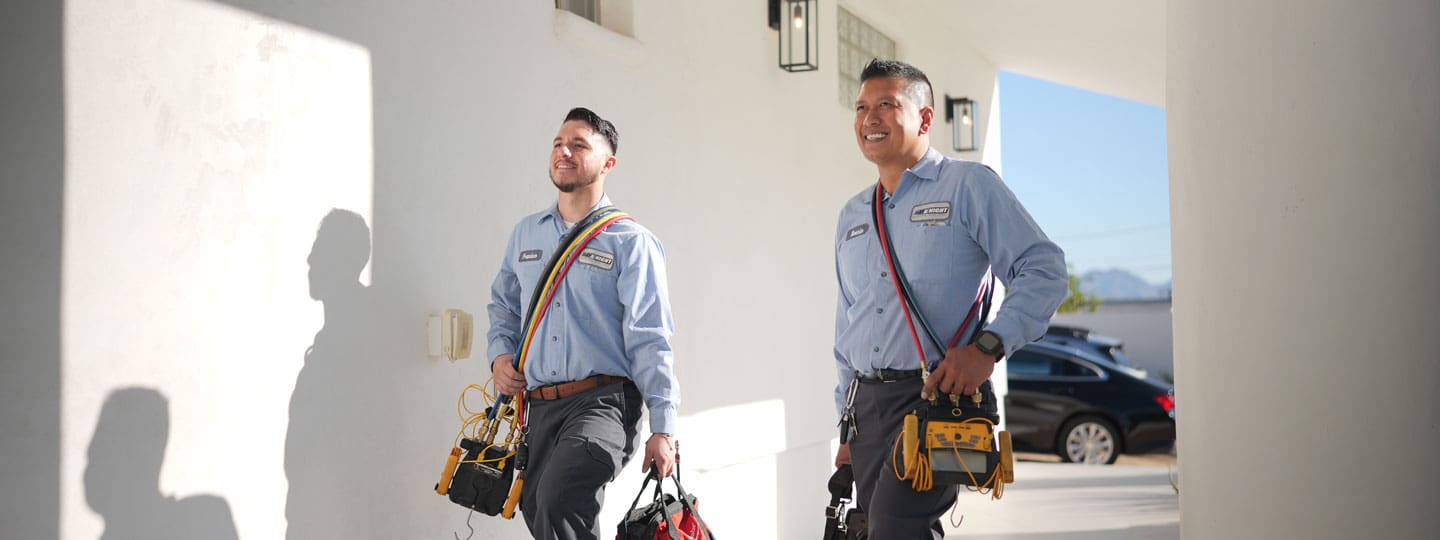
The dispatcher confirms the address and nearest landmark, whether it is Camelback Mountain, Chase Field, or Phoenix Sky Harbor. The tech arrives in a professional uniform and reviews the history. Diagnostics come first. Static pressure, superheat, subcooling, and electrical tests guide the repair plan. If a part is bad, trucks carry common capacitors, contactors, relay switches, thermostats, and MERV filters. Many calls wrap up on the first trip. For refrigerant leaks, the team locates the source and discusses repair paths. For clogged condensate drains, they clear the blockage and install tabs that fight algae.
Before leaving, the technician shows readings and explains how to care for the system during monsoon dust periods. Homeowners in 85001, 85016, 85018, 85021, 85032, 85044, 85048, 85050, and 85085 get service notes tied to local conditions and realistic filter intervals. This practical approach keeps systems stable through the worst of the Valley heat.
Why Phoenix Chooses Day & Night During Monsoon Season
Day & Night Air Conditioning, Heating, & Plumbing is a licensed, bonded, and insured HVAC contractor, ROC #133378. The company maintains a BBB A+ rating and fields NATE-certified technicians around the clock. Crews handle residential cooling solutions and commercial HVAC repair across Phoenix, Scottsdale, Tempe, Mesa, Chandler, Glendale, Peoria, Gilbert, and Paradise Valley. The team is known for same-day service, honest diagnostics, and a fixed-price guarantee that holds, even during peak heat.
The company’s fleet is staged across the Valley for fast response. From the shadow of Camelback Mountain to the Biltmore area, from Desert Ridge to South Mountain, technicians bring deep local knowledge of dust cycles and storm patterns. That local experience pays off in faster repairs and fewer repeat calls.
FAQ: Monsoon Dust and Your AC
How often should filters be changed during monsoon season in Phoenix? For most homes, every two to four weeks in July and August. Construction zones may need weekly changes. If static pressure rises fast, change sooner.
Is it safe to hose the outdoor unit? Yes, with gentle water from the inside out after shutting off power at the disconnect. Avoid high-pressure jets and avoid soaking electrical compartments.
What does “short cycling” mean in this context? The system turns on and off rapidly. Common causes are high head pressure from a dirty condenser, a weak start capacitor, or a safety switch opening due to poor drainage.
Why do drain lines clog more during monsoon? Dust mixes with condensate to form sludge and algae grows faster in warm, humid conditions. A flush with vinegar and professional cleanings reduce clogs.
Which brands hold up best in dust? Build quality helps, but maintenance matters more. Trane, Carrier, Lennox, Goodman, Rheem, York, Bryant, American Standard, Mitsubishi Electric, and Daikin all perform well with clean coils, correct charge, and good filtration.
Ready for Fast AC Repair Phoenix? Here’s How to Act Before the Next Haboob
Set a reminder to check your filter this week. Walk outside and clear a two-foot perimeter around your condenser. If it has been months since a coil cleaning, schedule a monsoon tune-up. If your system is short cycling, blowing warm air, or showing ice on the copper lines, shut it off and reach out for emergency air conditioning repair near me to protect the compressor.
Day & Night provides 24/7 emergency AC repair across Phoenix and the Valley of the Sun. Ask about the $50 off AC repair coupon for first-time service. Expect a licensed, bonded, insured team with NATE certifications and a fixed-price guarantee. Trucks are stocked with the parts that fail during dust season, including heavy-duty start capacitors and universal contactors, so repairs finish on the first visit whenever possible.
Book same-day service in Arcadia, Biltmore, Ahwatukee Foothills, Desert Ridge, North Mountain, Paradise Valley Village, Maryvale, South Mountain, Sunnyslope, and nearby zip codes 85001, 85016, 85018, 85021, 85032, 85044, 85048, 85050, and 85085. Service extends to Scottsdale, Tempe, Mesa, Chandler, Glendale, Peoria, Gilbert, and Paradise Valley. Keep your home safe and cool through the next haboob with local experts who know Phoenix and its monsoon behavior.
Schedule now with Day & Night Air Conditioning, Heating, & Plumbing. Secure a fast dispatch window. Be ready for the next wall of dust, and keep your system running strong all season.
Day & Night Air Conditioning, Heating & Plumbing 3669 E La Salle St,
Phoenix, AZ 85040 (602) 584-7758 www.dayandnightair.com AZ Licenses: ROC335883 | ROC335884 Google Maps | Facebook | Instagram | LinkedIn